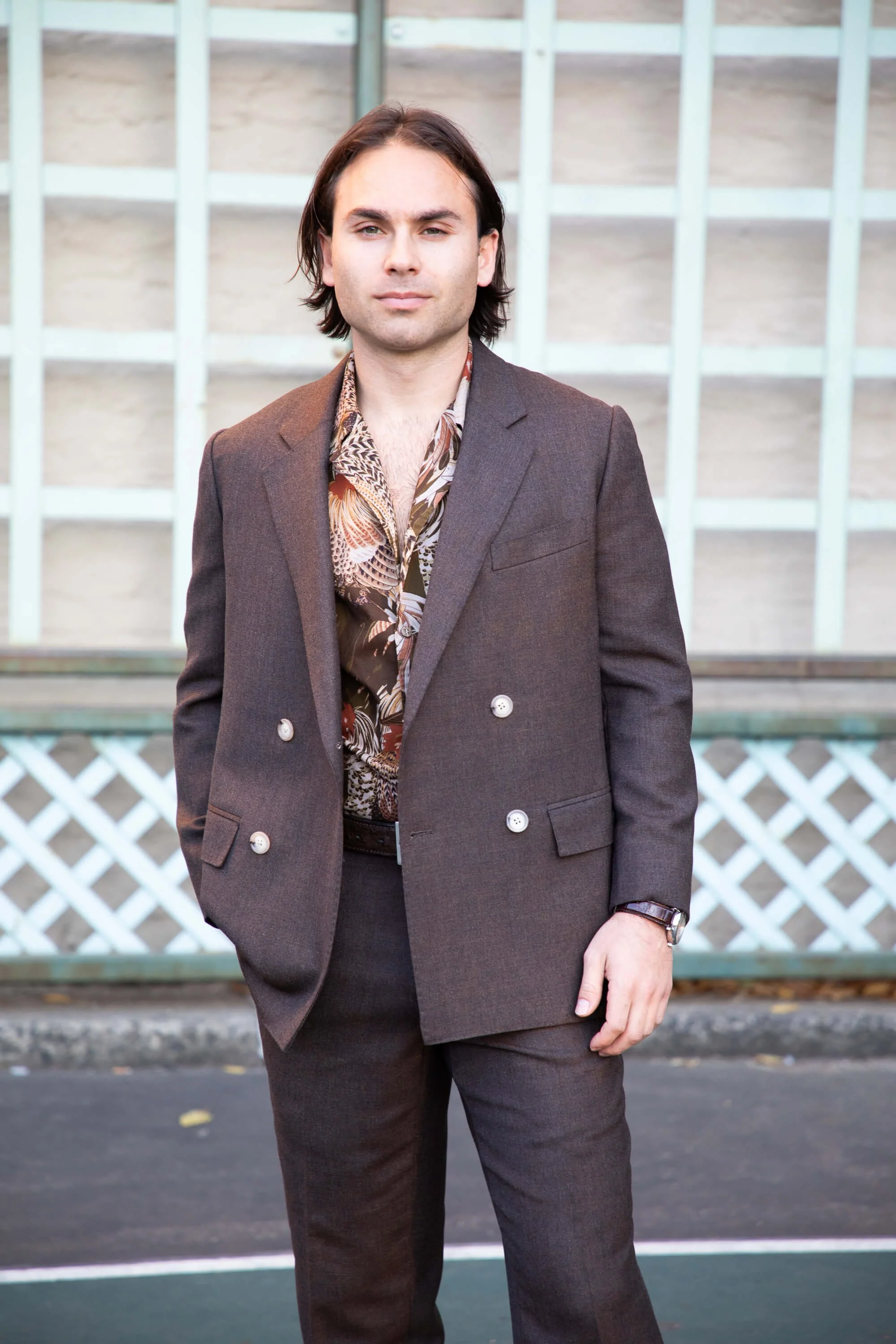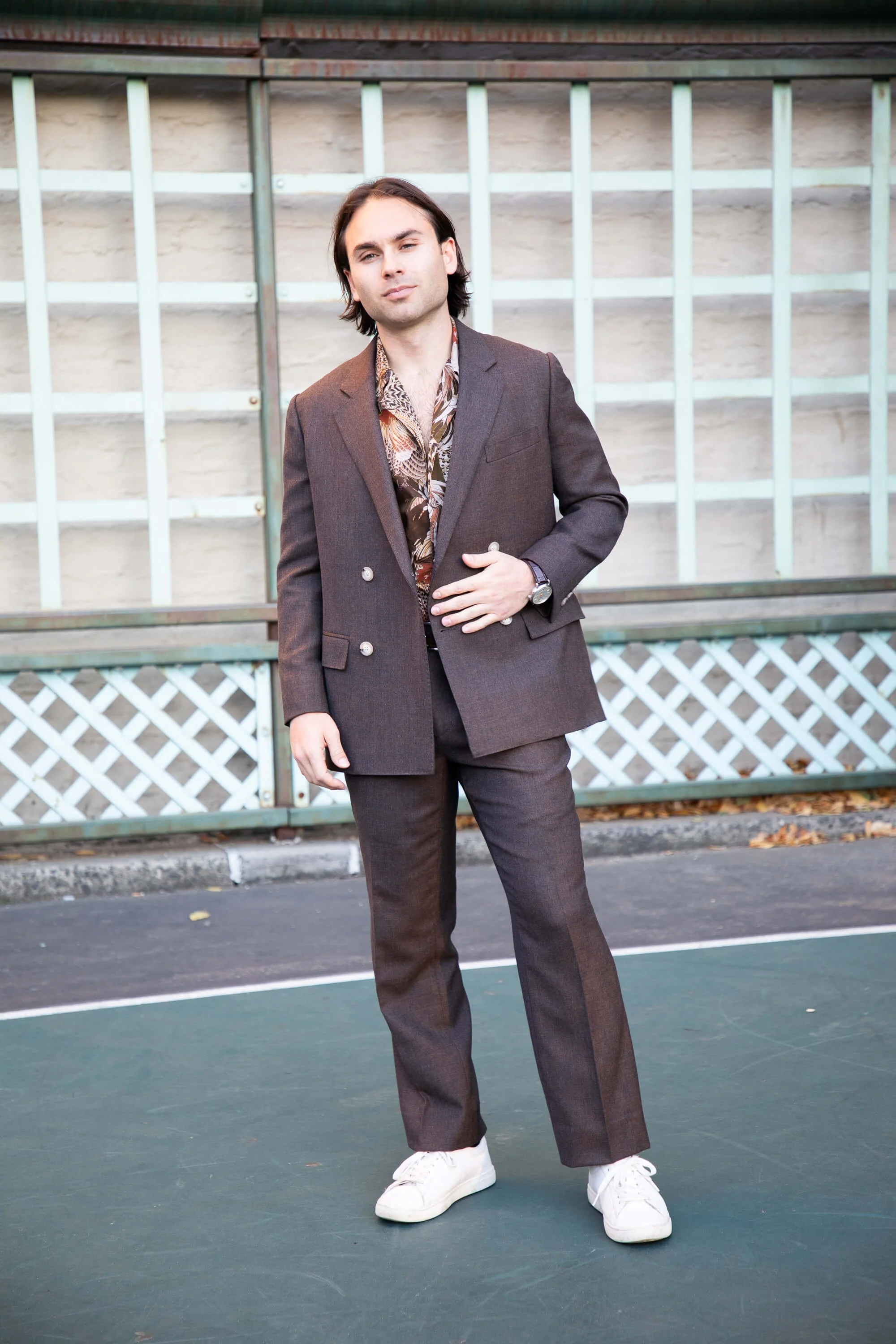
Cost is usually the first thing people want to know, and it's the hardest thing to answer in a sentence. We carry over 4,500 cloths, and a two-piece suit in an entry-level English worsted and the same suit in a vicuña blend are not remotely the same garment. So rather than quote you a figure here that goes stale the moment anything changes, here's what actually moves the price — the button above will always take you to what things currently cost.
The cloth
This is the single biggest variable, and it's the one you control. Our cloth comes from mills in Italy, France and England — the entry-level offerings from those houses are still excellent by any standard, and plenty of clients commission beautiful suits at the lower end of the range. From there it climbs: a four-season worsted sits well below a winter-weight cashmere, which sits well below the finest cashmere and rare-fibre blends.
What you're paying for as you go up isn't only prestige. It's yarn quality, finish, and how the cloth behaves — how it drapes, how it recovers from a crease, how it holds a press, how it ages. A high-twist tropical wool will wear cooler and crease less in August than a softer cloth at a similar price. That's a functional difference, not a badge.
The construction
Every Watson Ellis garment is fully canvassed. The canvas is the internal structure between the cloth and the lining — the thing that gives a jacket its shape and lets it mould to your chest over time. Most suits at most price points are fused instead: the structure is glued in. It's faster, it's cheaper, and it's why a fused jacket looks flat at the chest on day one and can bubble at the lapel after a few dry cleans.
A fully canvassed jacket is hand-padded through the lapel and chest. That's hours of work, and it's a fixed cost in every garment we make regardless of which cloth you choose. We don't offer a fused or half-canvassed tier, so this isn't a decision you make — it's the floor.
Everything is handmade, and one master tailor makes your garment start to finish. Not a line where one person does collars and another does sleeves. One set of hands, one pattern, one garment.
The garment type
A blazer costs less than a two-piece suit; an overcoat costs more than either, because it takes more cloth and more structure.
Tuxedos are the most expensive things we make, and the reason is specific: we use 100% silk satin on the lapels and trim. Most companies use polyester. Silk satin is harder to work with, it takes more time, and it takes a more skilled hand — so the making cost is higher on top of the material cost. White tuxedos carry a further small upcharge for the same reason: they're less forgiving and slower to finish.
The fitting service
Some clients need more fitting than others. If you're a challenging fit — significant asymmetry, a posture that pulls a jacket off balance, proportions that no pattern anticipates — we'll recommend our bespoke process, which adds a muslin fitting: a test garment made and fitted before we cut your actual cloth. That adds cost, and for the right client it's worth every dollar, because we solve the problem in calico rather than in a length of Loro Piana.
Most clients don't need it. We'll tell you honestly which camp you're in at your first fitting.
Why pay more than off the rack
The short answer is that a ready-to-wear suit is drafted to an average, and nobody is average.
If your shoulders sit at different heights, a rack suit will hang wrong on one side and there's a limit to what alteration can fix, because the internal structure was built for a shape you don't have. We draft to your proportions from the start. If you've spent years being told nothing fits, that's usually why — not because of your body, but because the garment was drawn for a shape before anyone met you.
Then there's what you can actually ask for. Lapel width, buttonhole placement, pocket style, the exact break of the trouser, a cloth nobody else in the room will be wearing. There's no configurator with twelve options. If you can describe it, we can usually draw it.
And these are built to last. Fully canvassed, hand-finished, made from cloth that improves with wear. We're making pieces you'll still want in fifteen years, which is a different economic proposition from a suit you replace every three.
How we handle it
Pricing is a conversation, and we have it early. We'll ask your budget at the start and work within it — there's no upselling, and you'll never be blindsided at the end by a cloth you didn't realise was expensive. If the design you want doesn't fit the budget you have, we'll say so and show you what does.
If you'd rather talk it through before committing to anything, book a free phone consultation and ask us directly.